


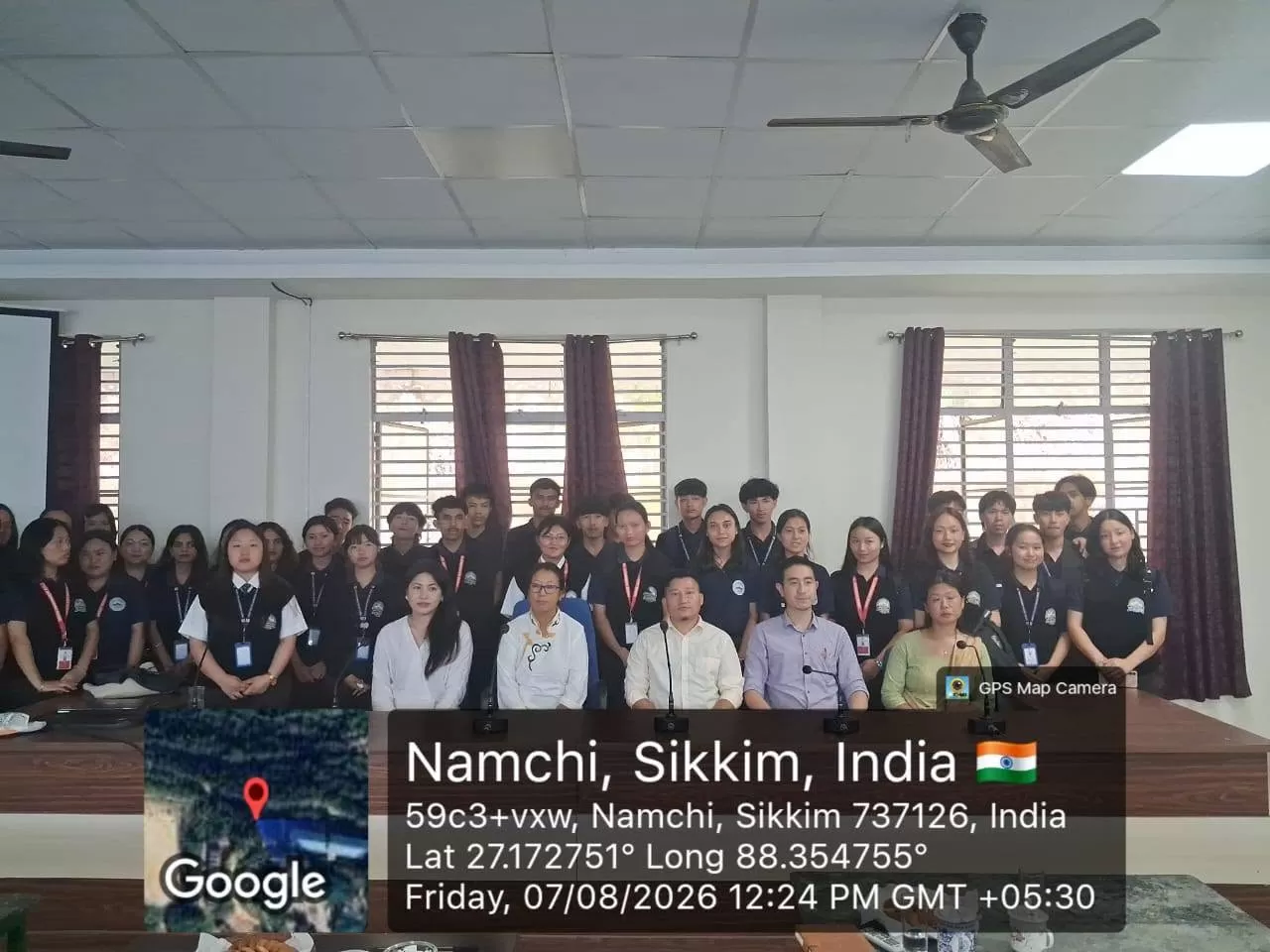
Namchi, 7th August 2026: The Department of Economics, Sikkim Government College, Namchi, celebrated National Handloom Day today at the Seminar Hall, Science Building, with the theme "Importance and Preservation of Local Handloom and Handicrafts related to Sikkim."
The programme brought together faculty, staff, and students to reflect on the rich weaving and craft traditions of the state and the urgent need to safeguard them for future generations.
The Guest Speaker for the occasion was Mrs Pema Kesang Sherpa, Assistant Branch Inspector cum In-charge, Heritage Museum, Directorate of Handicrafts and Handloom Department, Namchi, Government of Sikkim. Drawing on her extensive experience with the department, she spoke on the cultural, historical, and economic significance of Sikkim's handloom and handicraft heritage, and the ongoing efforts to preserve these traditional art forms in a rapidly modernising world.
The programme was graced by Dr. Yougal K. Khanal, Dean of Students Affairs, who represented the Principal, along with Mr Phurba Lepcha, Head of the Department of Economics, faculty members, non-teaching staff, and students of the department.
Proceedings began at 11:00 AM with a welcome address by the Master of Ceremonies, Mr Kunzang T. Shangderpa, Assistant Professor, Department of Economics, who formally introduced and welcomed the Guest Speaker. This was followed by an address from Dr. Yougal K. Khanal, Dean of Students Affairs.
The session then moved into the main talk, opening with an introduction to the day's theme before Mrs Pema Kesang Sherpa took the floor to share her insights. Her talk was followed by an interactive question-and-answer session, where students engaged enthusiastically with the speaker, followed by her closing feedback and remarks.
The programme concluded with a vote of thanks proposed by Mr Phurba Lepcha, HOD, Department of Economics, who expressed gratitude to the Guest Speaker, the Dean of Students Affairs, faculty, staff, and students for making the event a success.
The celebration served as a timely reminder of the importance of preserving Sikkim's indigenous handloom and handicraft traditions, and of the role educational institutions can play in keeping this cultural heritage alive.